





Why Choose Thurso?
See how we compare to other paddle board brands.
| Thurso Surf | Other Brands | |
|---|---|---|
| Material | Woven Drop-stitch | Knitted Drop-stitch |
| Construction | Fused Double-layer PVC | Single-layer PVC |
| Seams | Heat-Welded | Glued |
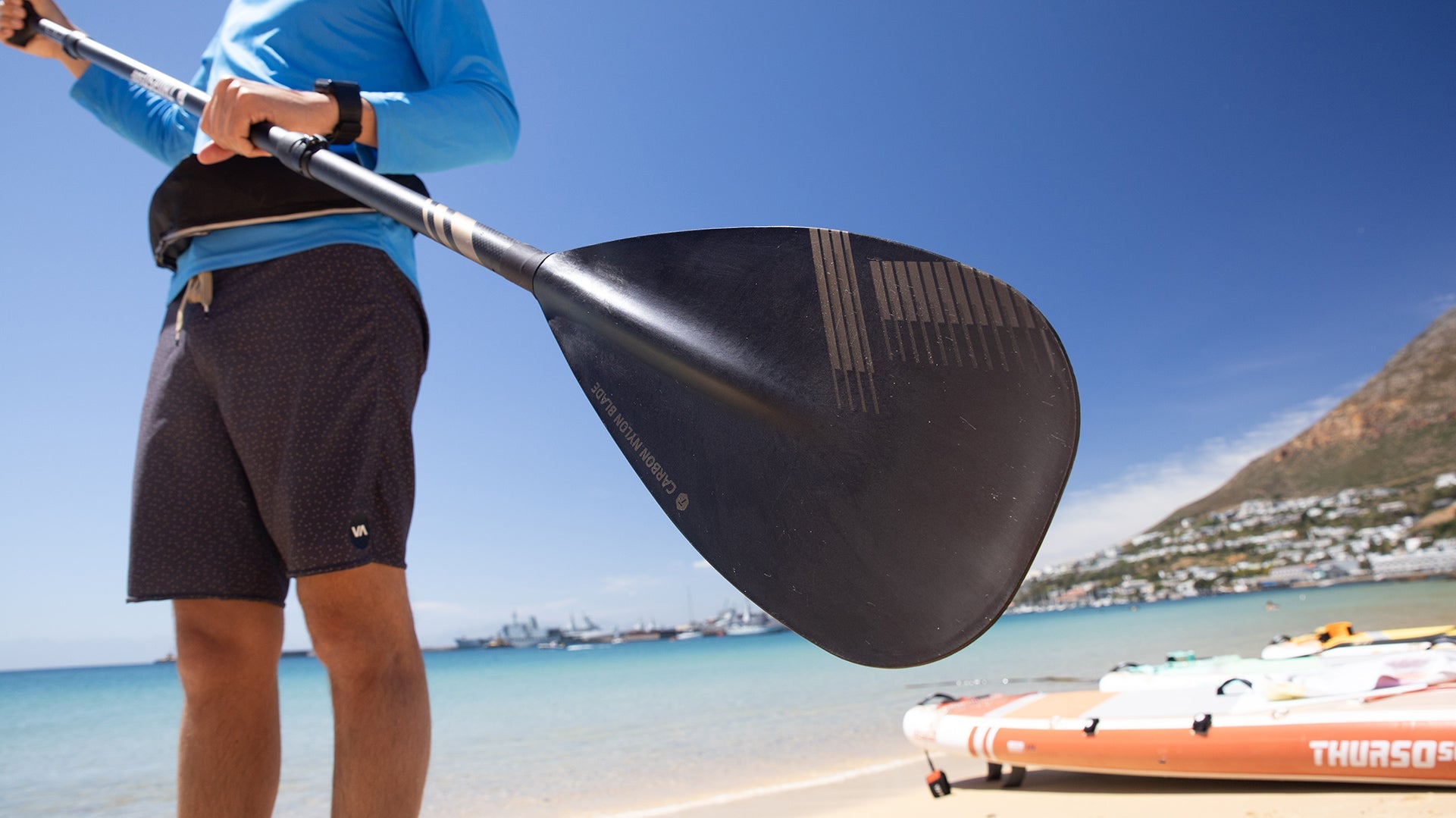
| Paddle | Carbon Shaft Paddle | Aluminum |
| Accessories | Premium kit | Basic kit |
| Warranty | 2 Years | 1 Year |
Frequently Asked Questions
You're ready when you can consistently maintain balance while paddling in varying conditions, execute forward, reverse, and sweep strokes confidently, and handle light chop. Typically after one full season of regular paddling. At this stage, you can benefit from a longer, narrower board with more glide.
Intermediate boards are generally longer (11ft+) and slightly narrower than beginner boards, trading some stability for speed and glide efficiency. The Waterwalker 132 (11ft) and Expedition 138 (11ft 6in) bridge the gap — still stable but noticeably faster than shorter all-around boards.
Yes. Longer boards handle chop and wind better than shorter boards. The Expedition 138 and 150 are particularly well-suited to open water and coastal paddling. Avoid dumping beach breaks on a touring board — they are designed for flatwater and open ocean, not surf zones.
Focus on blade entry angle (plant fully before pulling), torso rotation (use your core, not just arms), and board trim (keep weight centred). Paddling with others who are more experienced is one of the fastest ways to improve. SUP-specific coaching sessions are also available in most coastal areas.
At the intermediate level, consider upgrading to a carbon or carbon-hybrid paddle for less fatigue on longer sessions, add a waterproof deck bag for water and snacks, and invest in a proper wetsuit or drysuit if paddling year-round in cooler climates. A GPS watch for tracking distance and pace is also useful.