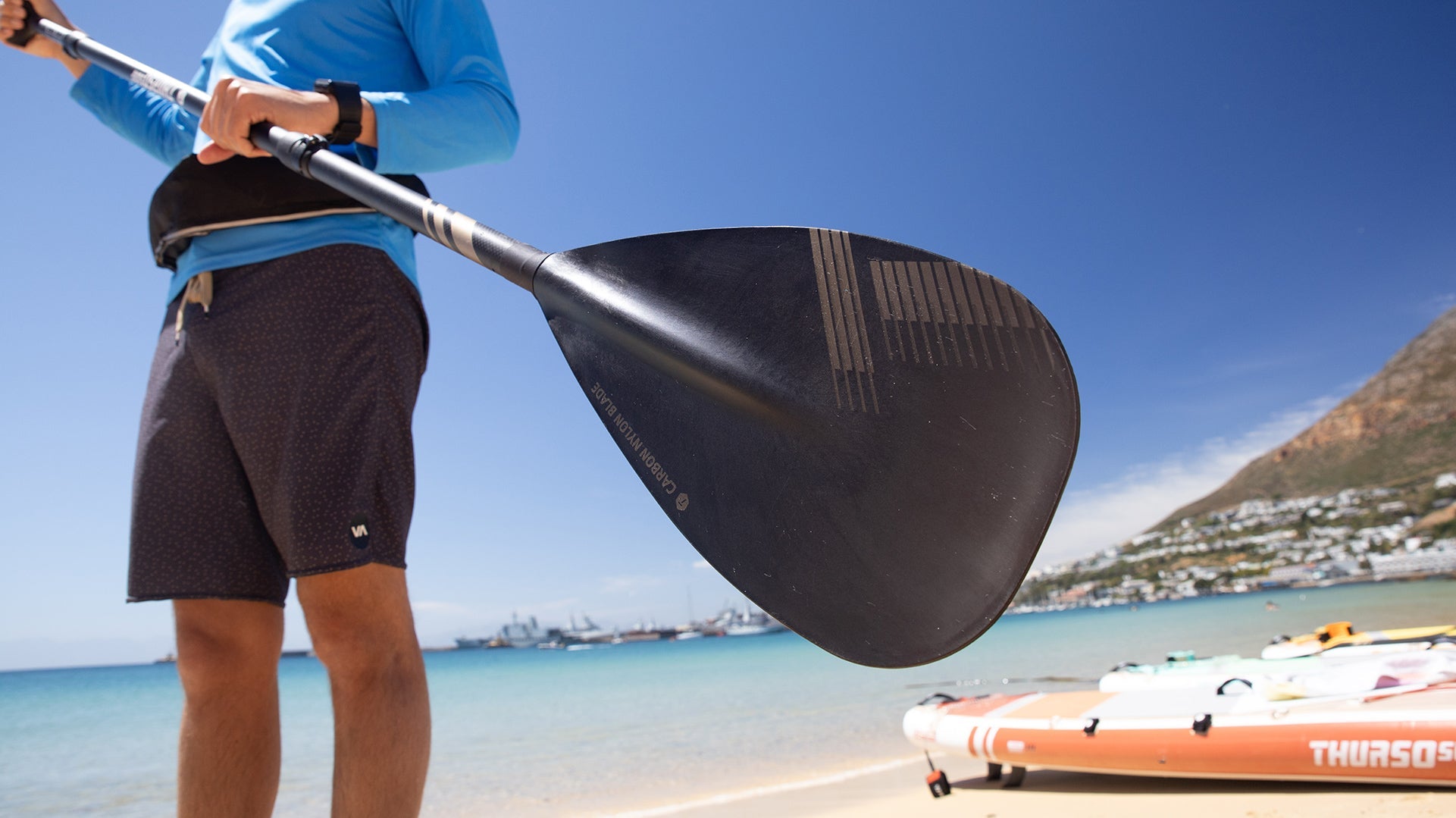
The Thurso Paddle story is a bit complicated. There are three versions: Hybrid (newer nylon), Elite (carbon), and a slitted low-drag option. Adjustable from 71–87 inches, it features an easy-tension, twist-free clamp layout, a 10-degree dihedral blade angle, and an 85–87 square inch face.
The newest carbon nylon hybrid model runs 40% off on sale and pairs with an extra conversion blade for kayaking. Do not let the ergonomic handle look fool you. The hole going completely through the 7" x 4.25" handle grip looks like it might cause hand cramps, but it is incredibly comfortable—arguably more so than my Starboard.
As an above-average kayaker with over 33,000 nautical miles of experience circumnavigating Southeast Alaska and paddling across Oregon, Washington, and Texas, I know efficiency. Dropping the spare blade in to create a 96-inch kayak paddle setup makes this stand-up board fly, leaving a distinct wake behind me. My core and torso do 100% of the work using a high angle of attack. The kayak motion resembles a freestyle swimming stroke, while my SUP style uses a long cadence where I lock my knee on the stroke side and turn my torso underneath my lead arm instead of leaning forward to pull the board. Different strokes for different folks.
The Thurso's 10-degree face cut completely eliminates blade flutter while grabbing water aggressively. It delivers a 20–22% boost in speed and efficiency over the cheap stock Flypark stock blade. My Alaskan touring background taught me that keeping a long blade in the water against heavy wind and current maximizes glide, so I dig in rather than taking quick mini strokes.
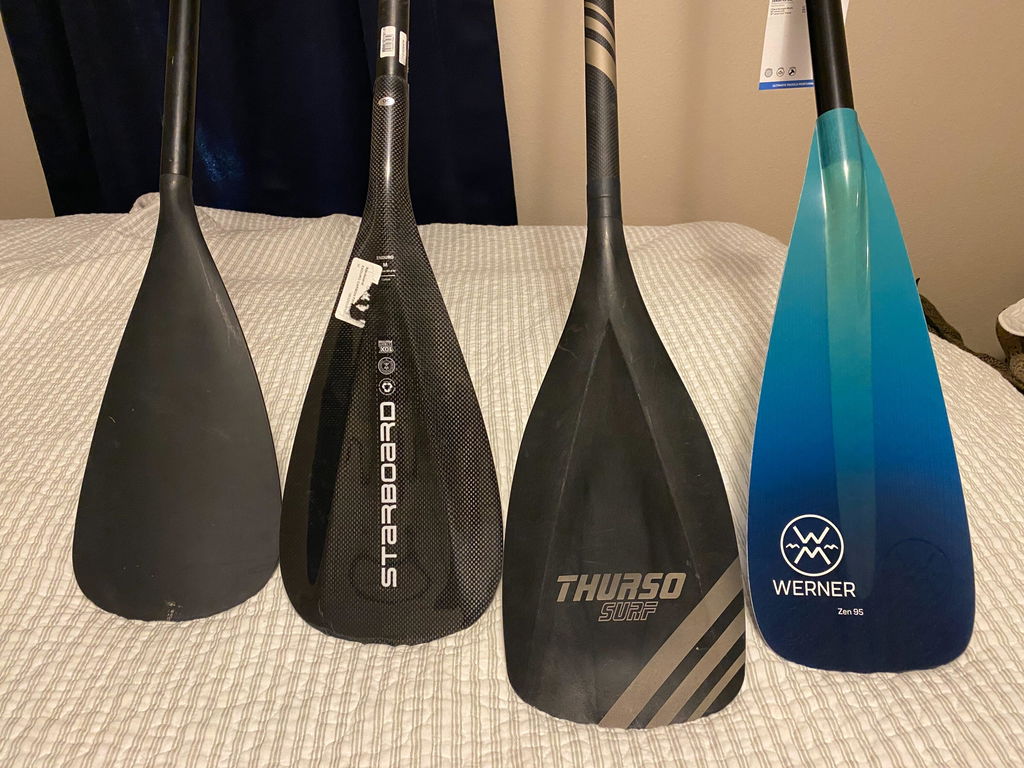
While the Thurso is a massive upgrade, my Starboard Enduro M holds the edge due to its ultra-light carbon swing weight and an aggressive 13-degree blade rake. However, Starboard uses marketing hype to claim a 19.2-inch blade length. They measure clear up to the shaft joint, hiding over 3 inches of non-functional neck shaft. Measuring the actual usable surface area from the shoulders down, the Enduro is 15" x 7.75" (technically 7 13/16ths), which mirrors the cheap Flypark shape at the shoulders but wins on rake, weight, and eased edges. The Thurso measures a true 15.25" x 7.5" and grips water tightly with its squared teardrop bottom, though Thurso is wrong to round their width up to an 8-inch catalog spec.
To improve the Thurso shaft, they should print a simple alignment line on the opposite side of the graphics. This would let paddlers line up the blade with the hidden button hole at a quick glance instead of fumbling to square it up.
My new Werner Zen 95 just arrived at the door. It measures 16.75" x 7" (roughly 91 square inches), offering a deeper, narrower vertical profile than the others. If you struggle to move your trail hand over the rail for a true vertical catch, the Zen 95 is built for you. Still, the Thurso remains a top-tier contender for anyone upgrading their "came in the kit" paddle.
On the ugly side, Thurso's messy inventory partnership with Amazon caused a full three-week delivery delay. They also need to fix their site to state the true 7.75-inch blade width instead of rounding off.
At 40% off, the Thurso is an excellent value. I would only pay full retail if buying the Elite carbon setup for a lighter swing weight. While all paddles feel the same weight when pulling through a water stroke, you will absolutely feel the cumulative weight penalty of a heavier hybrid shaft during the recovery lift, stroke after stroke. Fortunately, the tough hybrid material resists chips and dings, meaning you never have to baby it. If you want to skip spending hundreds on full carbon, this is your blade. If you want it lighter, buy the Elite. Simple.






 Order Now
 Ships
 At your Door